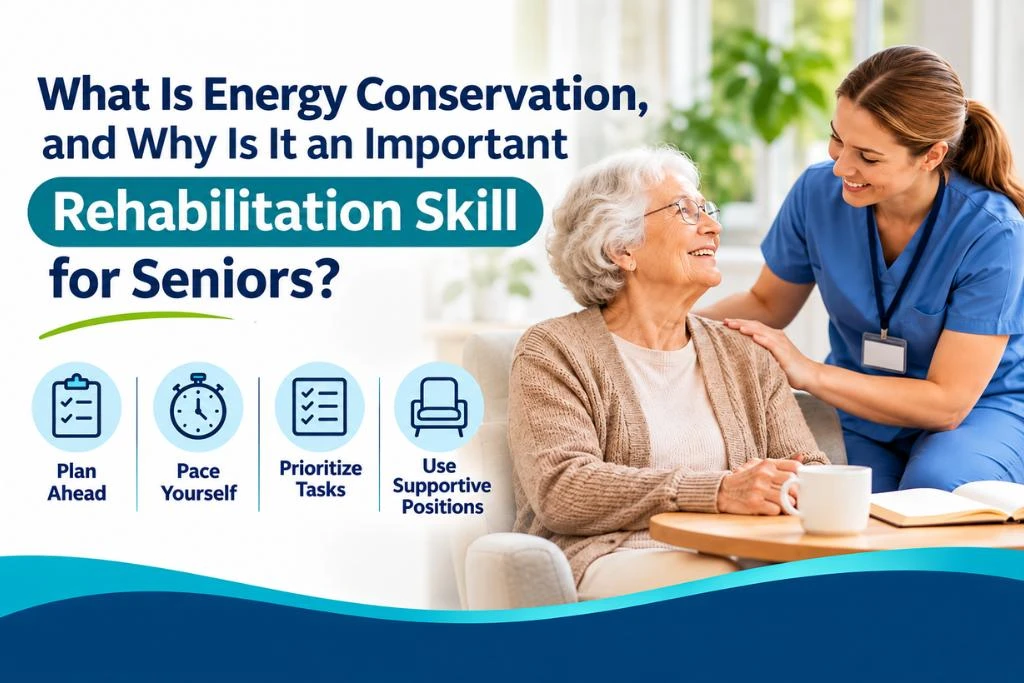
Learning to use energy wisely can help seniors recover with more comfort, confidence, and independence in everyday life.
When an older adult begins rehabilitation after surgery, illness, or a hospital stay, the focus is often on rebuilding strength, improving mobility, and regaining independence. Families look forward to milestones such as walking longer distances, getting dressed without assistance, or returning to familiar daily routines. While these improvements are important, another rehabilitation skill can make a meaningful difference in everyday life: learning to manage energy effectively.
For seniors recovering from a medical event, activities that once seemed effortless can suddenly become exhausting. Taking a shower, getting dressed, preparing breakfast, or walking from one room to another may require more physical effort than expected. Even when someone is making steady progress in therapy, fatigue can interfere with their ability to complete daily tasks comfortably and safely. This is where energy conservation techniques become especially valuable.
Energy conservation isn’t about avoiding activity or limiting independence. Instead, it’s about learning how to use available energy wisely so that important tasks can be completed without unnecessary exhaustion. Through thoughtful planning, pacing, and practical adjustments to everyday routines, seniors can learn to balance activity and rest while continuing to work toward their recovery goals. For individuals participating in a rehabilitation program in Morehead City, NC, these techniques can be an important part of improving daily function and preparing for a successful transition home.
Jump To Section
The Basics
What Is Energy Conservation in Senior Rehabilitation?
Energy conservation refers to a collection of strategies that help individuals complete everyday activities while reducing unnecessary physical effort and managing fatigue. These techniques are commonly used in rehabilitation settings to support people whose strength, endurance, or overall energy levels have been affected by illness, injury, surgery, or chronic medical conditions.
Imagine a senior who used to start each morning by making the bed, taking a shower, getting dressed, and preparing breakfast. Before hospitalization, these activities may have required very little thought or effort. During recovery, however, completing the same routine might leave that person exhausted before the day has even begun. Rather than eliminating these activities, energy conservation techniques help make them more manageable by changing how and when they are performed.
For example, a senior might learn to:
Sit while getting dressed
Gather supplies before starting a task
Spread more demanding activities throughout the day
These adjustments may seem small, but they can make a noticeable difference in how much energy is needed to complete familiar routines. The goal is to help individuals remain as active and independent as their abilities allow while avoiding unnecessary fatigue.
Understanding Fatigue
Why Is Fatigue So Common During Senior Recovery?
Fatigue is a common concern among older adults recovering from surgery, illness, or an extended hospital stay. Even a relatively short period of inactivity can affect muscle strength and endurance, making everyday movements more physically demanding. When the body is also healing from a medical event, seniors may find their energy levels significantly lower than before hospitalization.
Other health conditions can complicate fatigue and may all influence stamina, including:
Heart or lung disease
Diabetes and anemia
Sleep disturbances
Medication effects
Nutritional concerns
Some seniors also experience emotional stress as they adjust to temporary changes in independence or the challenges of rehabilitation. These factors can overlap, making it difficult to determine exactly why someone feels tired.
Because fatigue can have several causes, rehabilitation teams consider the individual’s overall health when developing a care plan. New, severe, persistent, or worsening fatigue should be evaluated by a healthcare professional rather than automatically attributed to aging or recovery.
Once medical concerns are appropriately addressed, energy conservation strategies can help residents manage daily activities while gradually improving strength and endurance.
The Four P’s
Understanding the Four P’s of Energy Conservation
One of the most practical ways to understand energy conservation is through four commonly used principles: planning, pacing, prioritizing, and positioning. Often referred to as the Four P’s, these strategies provide a framework for managing everyday activities without unnecessary exhaustion. Although each principle addresses a different aspect of daily life, they work best when used together and adapted to the individual’s needs.
Everyday Routines
How Energy Conservation Helps Seniors With Daily Activities
The benefits of energy conservation become especially clear when these techniques are applied to everyday routines. Activities such as bathing, dressing, preparing meals, and moving around the home often involve several steps that can become exhausting during recovery. By identifying which parts of a task require the most effort, rehabilitation professionals can help seniors find safer and more efficient ways to complete them.
Bathing may involve standing, reaching, washing, drying, and getting dressed afterward. A senior with limited endurance may struggle to complete the entire routine without becoming fatigued. Depending on the person’s abilities, an occupational therapist might recommend a shower chair, organizing supplies beforehand, or allowing time to rest between activities. These adjustments can help make personal care more manageable while reducing unnecessary physical demands.
Meal preparation is another activity that may require modifications during recovery. Standing at a counter, reaching into cabinets, and carrying ingredients can be tiring for someone who is rebuilding strength. Organizing the workspace, completing certain tasks while seated, and preparing food in smaller stages may help conserve energy. These strategies can be particularly useful after discharge, when seniors begin managing more responsibilities at home.
Building Endurance
Energy Conservation and Physical Therapy: Working Toward Better Endurance
Although energy conservation focuses on reducing unnecessary effort, it doesn’t mean seniors should avoid physical activity. In fact, appropriate exercise and movement are often essential parts of rehabilitation. The challenge is finding a balance that allows individuals to participate in therapy while managing fatigue and avoiding overexertion.
Physical therapy may focus on improving strength, balance, walking ability, transfers, and endurance. For a senior who becomes tired after walking a short distance, therapy may involve gradually increasing activity according to the individual’s abilities and medical recommendations. Learning to recognize fatigue, use mobility equipment appropriately, and take necessary rest breaks can help make this process safer and more manageable.
As strength and endurance improve, seniors may discover that activities requiring considerable effort at the beginning of rehabilitation become easier over time. Someone who initially needs several breaks while walking to the dining room may eventually complete the same distance with less fatigue. These changes are meaningful examples of senior rehab progress, showing how improvements in endurance and efficient movement can support greater functional independence.
For families considering a physical therapy rehab facility in Morehead City, it helps to understand how therapy addresses both physical abilities and the practical challenges residents may face in everyday activities.
Occupational Therapy
The Role of Occupational Therapy in Teaching Energy Conservation
Occupational therapy plays an especially important role in helping seniors apply energy conservation techniques to daily life. While physical therapy often emphasizes mobility, strength, and balance, occupational therapy focuses on the activities people need and want to perform throughout the day. These may include bathing, dressing, grooming, toileting, meal preparation, and other routines that support independence.
An occupational therapist may observe how a resident completes a familiar task and identify opportunities to reduce unnecessary effort. For example, someone who becomes exhausted while dressing may benefit from changing the order of activities, using adaptive equipment, or completing portions of the routine while seated. Another resident may need help organizing daily responsibilities so that physically demanding activities are spaced throughout the day rather than completed all at once.
Occupational therapy is particularly valuable because it focuses on the individual’s real-life needs. The goal isn’t simply to teach a set of techniques but to help residents understand how those strategies can make their own routines more manageable. By practicing these skills during rehabilitation, seniors may feel better prepared to use them after returning home.
Measuring Progress
Why Energy Conservation Is an Important Measure of Senior Rehab Progress
When families think about rehabilitation progress, they often picture improvements in walking distance, strength, or the amount of assistance their loved one requires. While these are important indicators, progress can also be reflected in how comfortably and efficiently a senior completes everyday activities. Being able to finish a morning routine without becoming completely exhausted may represent a meaningful improvement in daily function.
For example, a resident who initially needs several rest breaks while getting dressed may gradually learn techniques that allow them to complete the task with less effort. Another individual may become better able to participate in therapy and social activities throughout the day by pacing more demanding tasks. These improvements can support confidence and help residents maintain more consistent participation in their rehabilitation programs.
Energy conservation also encourages realistic expectations about recovery. Progress isn’t always a straight line, and some days may be more tiring than others. Learning how to adjust activity levels while continuing to work toward functional goals can help seniors navigate these fluctuations without becoming unnecessarily discouraged.
Going Home
Preparing to Use Energy Conservation Techniques at Home
One of the most important benefits of learning energy conservation during rehabilitation is the ability to carry these skills into everyday life after discharge. Returning home can be an exciting milestone, but it also brings responsibilities that may differ from those in a rehabilitation setting. Preparing meals, managing household tasks, attending appointments, and completing personal care activities may require careful planning while endurance continues to improve.
Discharge planning can help identify areas where additional support or modifications may be beneficial. A resident may need recommended adaptive equipment, assistance with more physically demanding chores, or continued therapy after returning home. Families can support the transition by:
Organizing frequently used household items
Reducing unnecessary obstacles
Recognizing when their loved one may need additional rest or assistance
It’s also important to recognize that recovery often continues well beyond the rehabilitation stay. Seniors may gradually regain endurance as they become more active, but energy conservation techniques can remain useful during this process. Rather than expecting someone to immediately resume every previous responsibility, families can encourage a balanced approach that supports continued progress while respecting current abilities.
Our Approach
Supporting Individualized Rehabilitation at Crystal Bluffs
At Crystal Bluffs Rehabilitation & Health Care Center, we understand that rehabilitation is about more than improving strength or mobility. It’s also about helping residents develop practical skills that support their ability to participate in everyday life with greater confidence and safety. For seniors experiencing fatigue or reduced endurance, learning how to manage energy can be an important part of that process.
Our therapy and rehabilitation services focus on addressing individual needs and functional goals. Through appropriate physical and occupational therapy, residents can work to improve mobility, complete daily activities, and develop strategies that support greater independence. Depending on individual needs, rehabilitation may include energy conservation techniques that help make everyday routines more manageable.
For families exploring a rehabilitation program in Morehead City, NC, understanding how therapy supports daily function can make it easier to evaluate the support a loved one may need. A personalized approach recognizes that every resident begins rehabilitation with different abilities, medical considerations, and recovery goals.
Ultimately, successful rehabilitation isn’t always about doing more or moving faster. Sometimes, meaningful progress comes from learning how to accomplish important activities more efficiently, recognize personal limits, and maintain enough energy to enjoy the things that make life fulfilling. At Crystal Bluffs, the focus is on helping residents build practical skills and work toward greater independence as they prepare for the next stage of recovery.
FAQs
Frequently Asked Questions About Energy Conservation in Senior Rehabilitation
Helping Your Loved One Recover With Confidence
Our therapy team right here in Morehead City works with each resident to build strength, manage fatigue, and prepare for a safe, successful return home. Reach out to schedule a tour or talk with our team about your family’s rehabilitation needs.