How Do Families Know Whether Rehabilitation Is Actually Working?
October 1, 2026
Before the Holidays: What Changes in an Aging Parent’s Daily Function Should Families Notice?
October 30, 2026
When several health conditions overlap, recovery works best when the whole care team looks at the whole person.
Recovering from an illness, injury, surgery, or hospitalization can be challenging on its own. For many older adults, however, rehabilitation doesn’t happen in isolation. A senior recovering from a hip fracture may also be living with diabetes and arthritis. Someone rebuilding strength after a hospital stay might have heart disease, balance problems, or a chronic respiratory condition. Another person may be working toward greater independence while managing several medications and ongoing mobility limitations.
When multiple health conditions overlap, rehabilitation requires more than simply treating the issue that led to the most recent hospitalization. A coordinated rehabilitation team considers how those conditions affect one another and how they influence the person’s strength, endurance, mobility, safety, and ability to complete everyday activities. For families considering a rehabilitation program in Morehead City, NC, understanding this team approach can make it easier to see how different aspects of care work together. At Crystal Bluffs Rehabilitation & Health Care Center, the goal is to look at the individual as a whole rather than focusing on one diagnosis at a time.
Jump To Section
The Challenge
Why Multiple Health Conditions Can Make Rehabilitation More Complex
Older adults frequently manage more than one health concern.
Imagine a resident who has recently undergone knee surgery but also has arthritis in the opposite knee and a heart condition that affects endurance. The rehabilitation team can’t focus solely on strengthening the surgical knee. The resident’s other conditions may influence how long they can exercise, how safely they can walk, and how quickly they can progress.
The same is true for someone with diabetes who is recovering from an illness. Blood sugar management, nutrition, energy levels, medications, and other factors may all affect the person’s overall recovery.
This doesn’t mean rehabilitation can’t be successful when multiple conditions are present. It means the plan needs to reflect the whole person.
Where It Begins
Rehabilitation Begins With Understanding the Individual
No two seniors arrive at rehabilitation with exactly the same starting point.
Before setting goals, the care team needs to understand the resident’s current abilities and needs. This may include strength, balance, mobility, endurance, ability to perform daily activities, and the level of assistance currently required.
The team also considers the resident’s previous level of function, asking questions such as:
Was the person walking independently before hospitalization?
Did they use a walker?
Did they prepare their own meals and dress independently?
Did a family member already provide assistance at home?
These details provide context. For a resident who previously walked independently, returning to safe independent mobility may be an important goal. For someone who already required assistance before hospitalization, progress may instead mean returning to that previous level or reducing the amount of help needed.
A personalized starting point makes senior rehab progress more meaningful because it measures improvement against the individual’s abilities and goals rather than a one-size-fits-all standard.
Physical Therapy
Physical Therapy Can Address Strength, Balance, and Mobility
Physical therapy may be part of rehabilitation when appropriate to the resident’s needs and medical plan. For someone managing multiple health conditions, physical therapy may address strength, balance, transfers, walking, endurance, and safe use of mobility equipment.
The therapist must also consider how other health concerns affect these activities:
Arthritis may influence how comfortably someone moves.
A chronic respiratory condition may affect endurance.
Neurological conditions may influence balance or coordination.
Therapy can be adjusted accordingly. Rather than expecting every resident to complete the same exercises at the same intensity, the approach can reflect individual abilities, precautions, and goals.
Progress may mean walking farther, but it can also mean:
Standing more steadily
Needing less assistance to get out of bed
Safely transferring to a chair
Becoming more confident using a walker
Occupational Therapy
Occupational Therapy Focuses on Everyday Independence
Walking down a hallway is important, but residents also need to function in everyday life. That’s where occupational therapy may play an important role.
Occupational therapy can address activities such as dressing, bathing, grooming, toileting, and other daily routines. Therapists may work on strength, coordination, problem-solving, and adaptive strategies for these tasks.
Multiple health conditions can make everyday activities surprisingly complicated:
Hand arthritis may make buttons or fasteners a struggle.
Limited balance may make it hard to dress while standing.
Fatigue from another condition may mean a person can complete an activity but can’t sustain the effort for very long.
Occupational therapy asks a practical question: what does this person need to do during an ordinary day? That focus can make rehabilitation goals feel much more relevant to life beyond the therapy room.
Speech Therapy
Speech Therapy May Address More Than Communication
Some residents may also benefit from speech therapy depending on their individual needs. Speech-language pathologists can work with residents experiencing difficulties involving communication, cognition, or swallowing.
For example, a resident recovering from a stroke may be managing mobility concerns while also experiencing difficulty communicating. Another person may need support with swallowing safety or the cognitive skills used during daily activities.
Not every resident needs speech therapy, just as not everyone requires the same combination of rehabilitation services. The appropriate therapies depend on the person’s condition and individualized plan.
Working Together
Nursing Care and Rehabilitation Work Together
Therapy may occur during specific parts of the day, but recovery continues outside scheduled sessions. This is one reason coordination between rehabilitation professionals and nursing staff is so valuable.
Nurses may observe how a resident manages throughout the rest of the day:
Is the person more fatigued than usual?
Has pain changed?
Are they having difficulty with transfers?
Has there been a change in appetite or overall condition?
These observations can provide useful context. At the same time, therapy staff may identify mobility techniques, positioning needs, or functional strategies to incorporate into everyday care when appropriate.
For residents managing several health conditions, communication among care team members helps create a more complete picture of how the person is doing.
Day to Day
Medication and Health Changes Can Affect Rehabilitation
Medications and health changes may influence how someone feels and functions during rehabilitation. A resident may experience fatigue, dizziness, pain, or other symptoms that affect participation. Changes in a chronic condition may also influence endurance or mobility.
Nursing staff can monitor residents per their care plans and communicate relevant changes to the appropriate healthcare providers. Rehabilitation professionals can also adjust therapy based on the resident’s abilities and condition that day.
This flexibility matters because recovery isn’t always a straight line. A resident may have an excellent therapy session one day and feel more tired the next. One difficult day doesn’t necessarily mean rehabilitation isn’t working. What matters is the overall pattern.
Nutrition & Hydration
Nutrition and Hydration Can Support the Bigger Picture
The body needs adequate nutrition and hydration to support everyday function and recovery. For seniors managing multiple health conditions, however, nutritional needs may be complicated.
A resident may have dietary needs related to diabetes, heart health, kidney function, swallowing ability, or other conditions. Illness, medications, fatigue, or changes in routine may also affect appetite.
Nutrition therefore can’t be treated as an afterthought. Depending on individual needs, dietary considerations can become part of the broader care plan so that meals and nutrition support the resident’s overall health requirements.
Families should avoid assuming that a particular diet, food, or supplement will speed recovery. Nutritional needs should be individualized based on the person’s medical situation and healthcare recommendations.
Measuring Progress
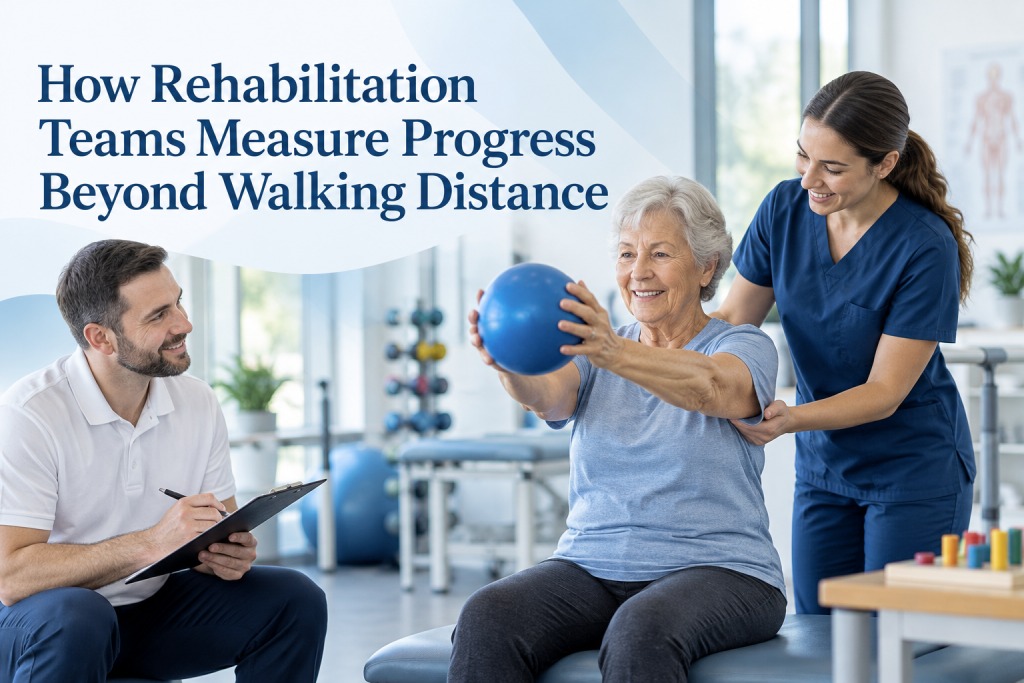
Tracking Senior Rehab Progress Requires Looking Beyond One Number
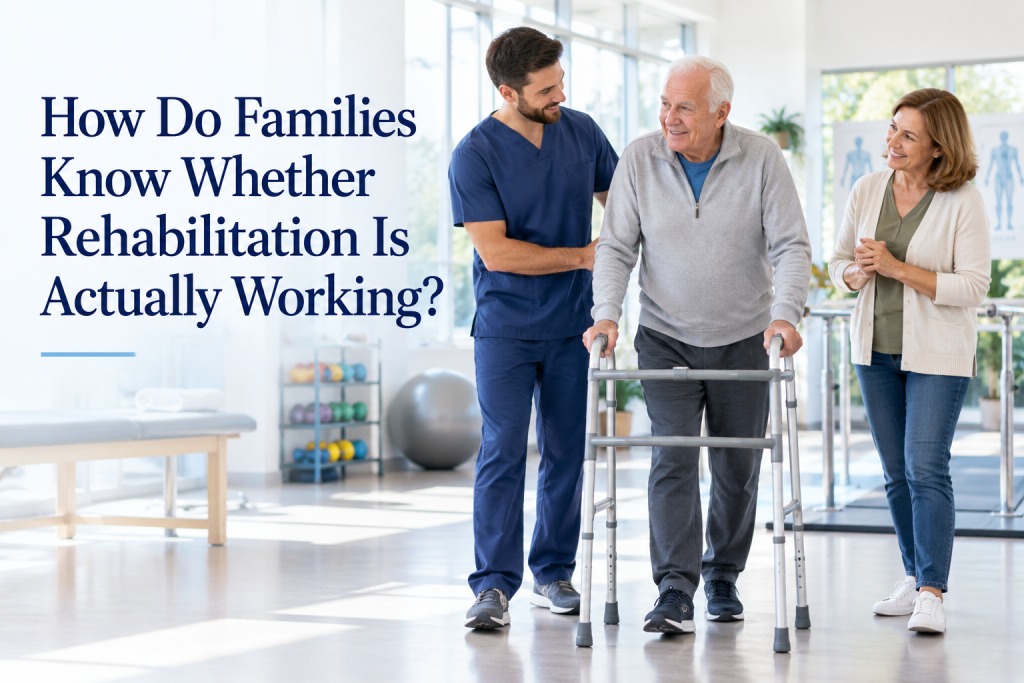
Families understandably want to know, “Is rehabilitation working?” Sometimes they expect one measurement to answer the question, such as how far their loved one can walk.
But senior rehab progress can appear in many forms:
A resident who once required two people to help with a transfer may now need one
Standing longer while getting dressed
Walking safely with less assistance
Completing more steps of a grooming routine independently
Endurance matters too. Completing an activity without becoming as fatigued may represent meaningful improvement even when walking distance hasn’t changed dramatically.
Other signs of progress can include improved balance, greater confidence, safer movement, better use of adaptive equipment, or increased participation in everyday activities. For someone managing multiple health conditions, these functional changes can be particularly meaningful.
Flexible Goals
Goals May Need to Change During Rehabilitation
An individualized rehabilitation plan shouldn’t remain unchanged regardless of what happens. A resident’s abilities and needs may evolve during recovery.
Some goals may be reached faster than expected. Others may take longer. A change in health could temporarily affect participation or require the team to reconsider what is safe and realistic.
Adjusting a goal doesn’t necessarily mean someone has failed. It means the rehabilitation plan is responding to the person rather than forcing the person to fit a predetermined schedule.
Families can ask the care team:
What goals they’re currently addressing
What progress they’ve observed
What barriers are affecting recovery
What level of assistance to expect at discharge
These conversations can make senior rehab progress easier to understand.
Family Involvement
Family Involvement Can Help the Team Understand What Matters Most
Family members often know details that are difficult to capture on a medical chart.
You may know that Dad has to navigate three steps to enter his home. You may know that Mom’s favorite chair is low to the ground or that she used to dress independently but now needs help with bathing. That information can help inform rehabilitation goals and discharge planning.
Families can also learn how their loved one’s abilities have changed. If they may need assistance, equipment, or home modifications after discharge, understanding those needs before the transition can make preparation easier.
Ask questions throughout rehabilitation rather than waiting until the final day.
The Whole Person
Rehabilitation Should Focus on the Person, Not a Collection of Diagnoses
When an older adult has several health conditions, care can easily start sounding like a list: diabetes, arthritis, heart disease, recent surgery, balance problems.
But the resident isn’t a list of diagnoses. They’re a person who wants to get to the bathroom safely, sit at the dinner table, get dressed, visit with family, return home when appropriate, or participate in activities they enjoy.
Effective rehabilitation connects clinical goals to those real-life priorities.
If you’re researching a nursing home in Morehead City, NC, ask how rehabilitation professionals, nursing staff, and other care team members communicate and how they individualize goals. Those answers can tell families a great deal about how the facility approaches recovery.
Our Approach
Coordinated Rehabilitation at Crystal Bluffs
At Crystal Bluffs, rehabilitation centers on each resident’s individual needs and abilities.
For seniors managing multiple health conditions, that individualized approach matters most. One diagnosis may affect mobility, another may influence endurance, and another may affect how independently someone can complete daily tasks.
A coordinated rehabilitation program in Morehead City, NC can bring these different considerations together. Rather than asking only, “Has the original injury or illness improved?” the care team can look at broader questions:
Is the resident moving more safely?
Are they requiring less assistance?
Has endurance improved?
Can they complete more daily activities?
What challenges remain?
What support may be needed next?
Recovery can be complicated when several health conditions are involved, and progress won’t look identical for every resident.
But when rehabilitation, nursing care, individualized goals, and ongoing communication work together, the focus stays where it belongs: helping each person work toward the safest, most meaningful level of function possible.
Common Questions
Frequently Asked Questions About Rehabilitation and Multiple Health Conditions
Can seniors participate in rehabilitation if they have several chronic health conditions?
Yes, many seniors with multiple health conditions can participate in rehabilitation when it is medically appropriate. The rehabilitation plan should account for the individual’s diagnoses, abilities, precautions, endurance, and overall health, not just the condition that led to rehabilitation.
How is senior rehab progress measured?
Senior rehab progress may be measured through changes in strength, balance, walking, transfers, endurance, assistance levels, and ability to complete everyday activities. Progress should be evaluated based on the resident’s individual starting point and goals rather than using one measurement for everyone.
Do all rehabilitation residents receive physical, occupational, and speech therapy?
No. Therapy services are based on individual needs. Some residents may benefit from physical and occupational therapy, while others may also require speech therapy for communication, cognition, or swallowing concerns. The appropriate combination depends on the resident’s condition and care plan.
Why is communication between nurses and therapists important?
Nurses and therapists may observe different aspects of a resident’s condition throughout the day. Sharing relevant information about mobility, fatigue, pain, daily activities, health changes, and other concerns helps the team understand the resident’s overall progress and adjust care as needed.
What should families ask about a rehabilitation program in Morehead City, NC?
Families considering a rehabilitation program in Morehead City, NC can ask how the program sets goals, which therapy services may be appropriate, how it measures progress, how nursing and rehabilitation staff coordinate care, and how families are included in discharge planning. For a senior managing multiple health conditions, families should also discuss how those conditions may affect therapy and the overall plan of care.
Let’s Talk About Your Loved One’s Recovery
Our team right here in Morehead City is happy to answer your questions about rehabilitation, nursing care, and how we support seniors managing more than one health condition. Schedule a tour and see our coordinated approach in person.